Gekokujo Jidai
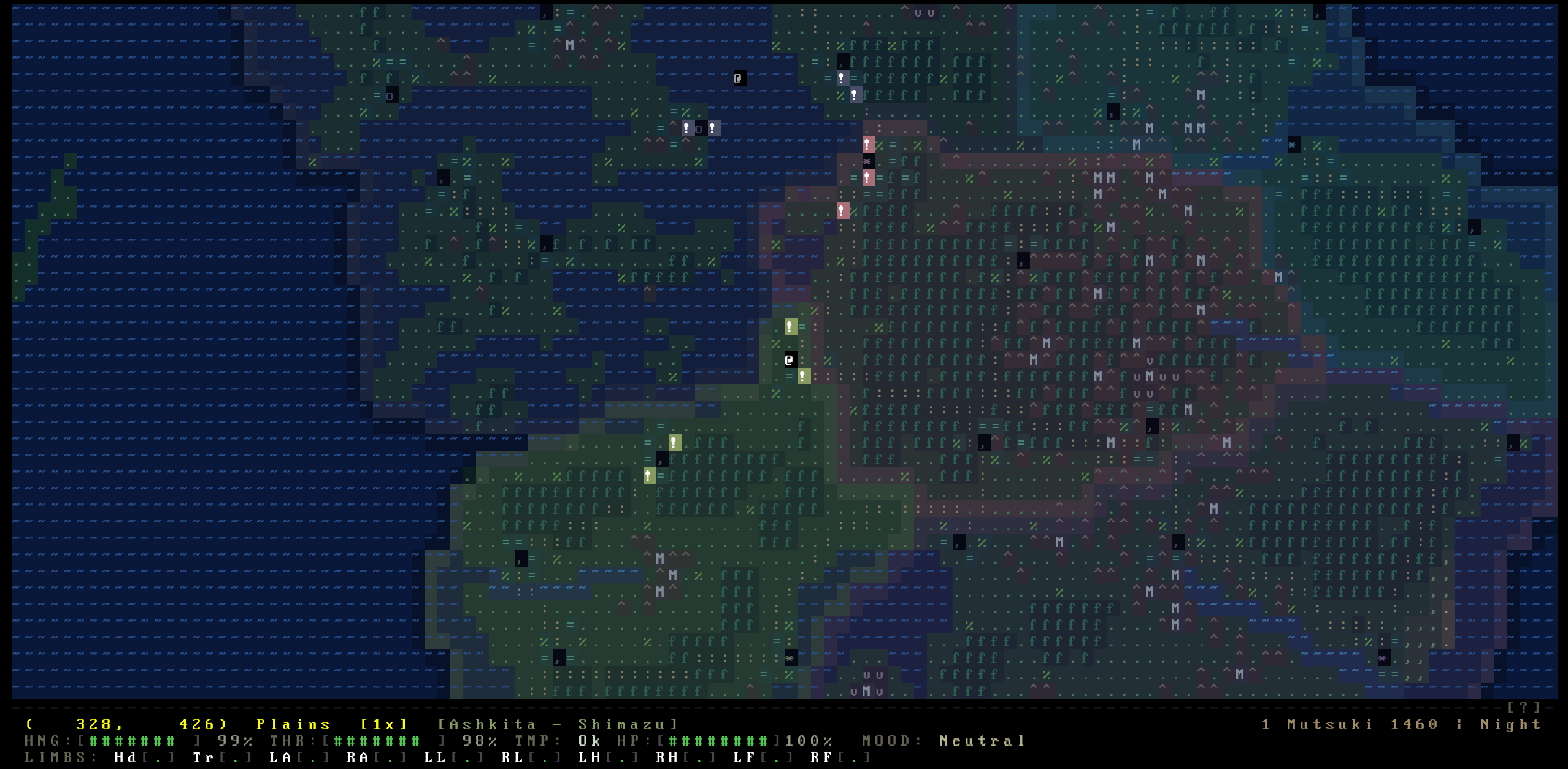
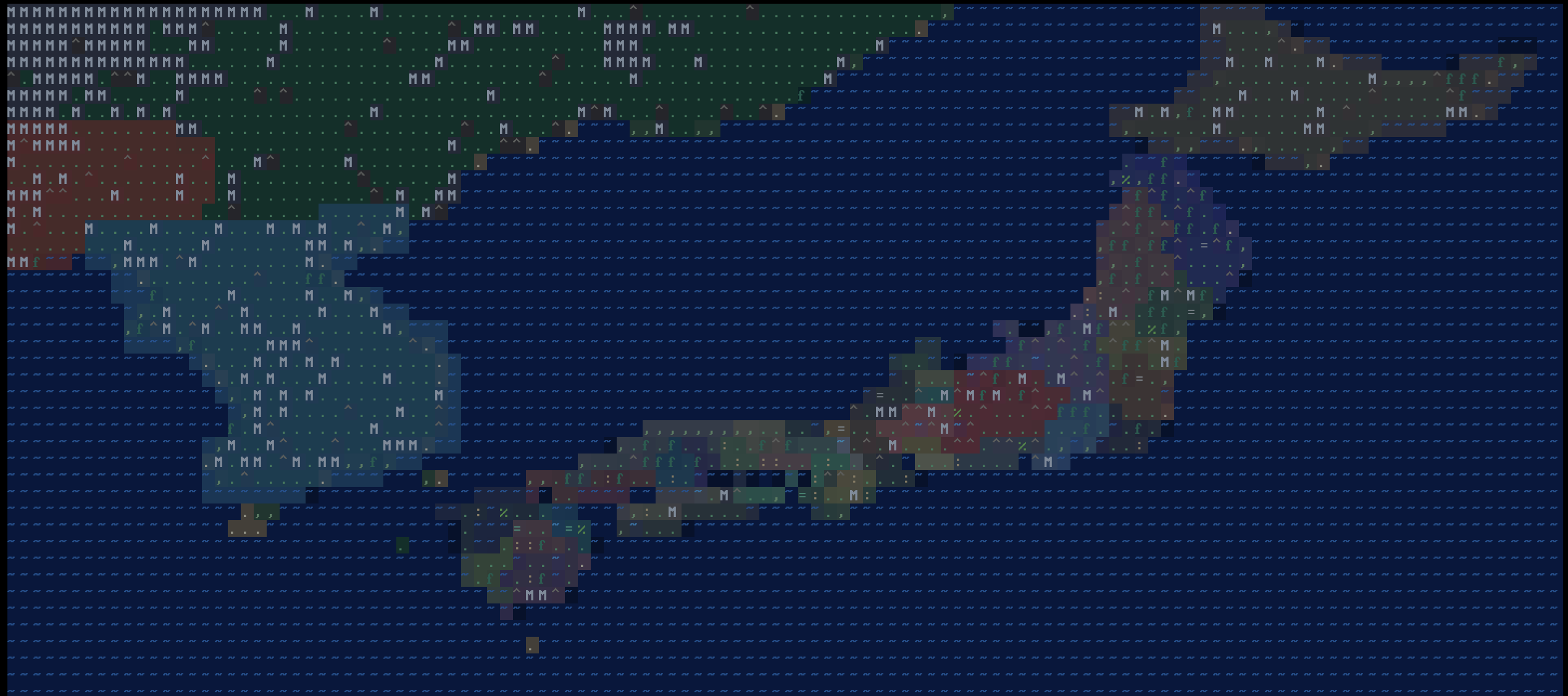
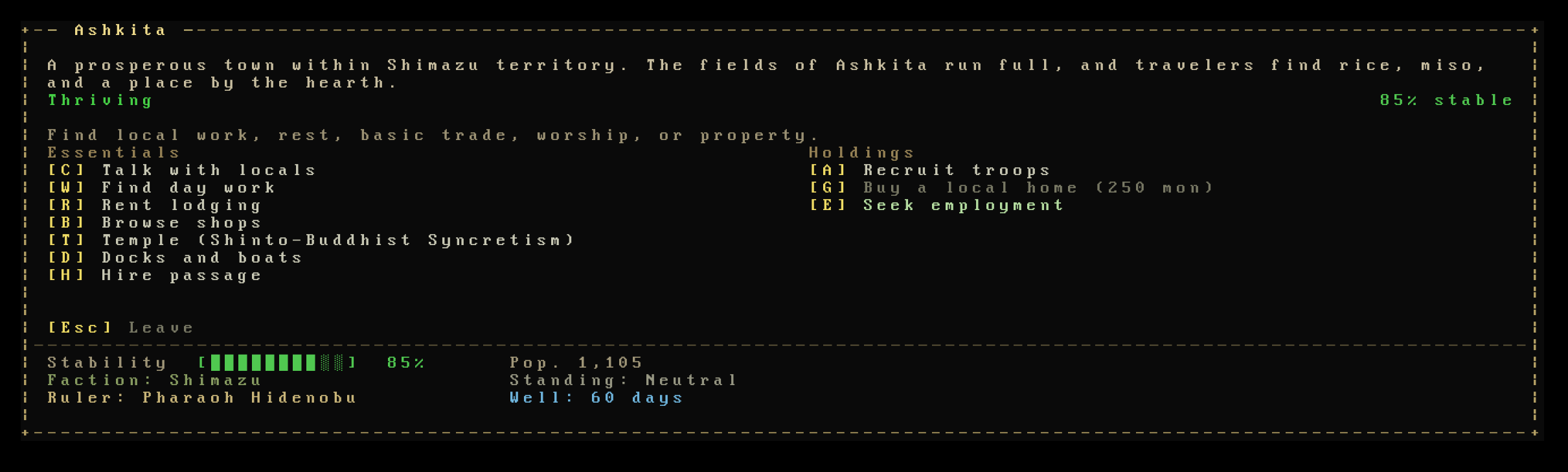
Gekokujō Jidai Gekokujō Jidai is a terminal roguelike survival RPG set during the Japanese Warring States period, starting around 1460. The title comes from 下克上, meaning something close to “the low overthrowing the high.” That idea is the center of the game. This was a period where old authority was breaking down, local powers were becoming more independent, temples and leagues could raise armies, and people far below the ruling class could sometimes rise through violence, loyalty, luck, or betrayal. You do not play as a daimyo controlling Japan from above. You play as one person trying to live through it. You might serve a lord, work for a temple, travel between markets, join a warband, hunt for food, carry messages, rob travelers, become a retainer, or simply try not to starve. The larger clans fight their wars in the background, but those wars eventually reach the road, the village, the port, and the campfire. Current Focus The goal of the game is to combine: traditional terminal roguelike gameplay survival mechanics character-driven roleplaying a living historical world simulation grounded tactical combat modding support The game is not trying to be a grand strategy game. The world simulation matters, but the player experiences it from the ground level. A castle siege might change who controls a province, but for the player it may mean blocked roads, higher prices, deserters, refugees, patrols, new job offers, or a dangerous chance to profit. Setting The game takes place across a large overworld map covering Japan and nearby regions, including Korea, the Ryukyus, Ainu lands, and northern frontier areas. Many historical houses and factions are represented, including: Ashikaga, Shimazu, Oda, Tokugawa, Takeda, Uesugi, Mōri, Imagawa, Asakura, Hosokawa, Ikko Ikki, and many others. Each faction has territory, culture, religion, government type, enemies, and internal stability. The Ashikaga Shogunate still exists at the start, but its authority is weak and continues to erode as the campaign progresses. The world keeps moving even when the player is not involved. Clans can raise armies, fight over castles, form alliances, betray each other, lose retainers, collapse, recover, or be replaced by smaller powers. Religion and Culture Religion is part of the simulation instead of just background flavor. The game includes several religious traditions and cultural systems, such as Shinto-Buddhist syncretic practice, Ikko Ikki Pure Land movements, Nichiren sects, Esoteric Buddhism, Joseon Neo-Confucianism, Ryukyuan ancestor rites, Ainu Kamuy beliefs, and northern shamanic traditions. These affect factions, characters, quests, social reactions, and world events. There is also an optional setting where one religious tradition can be made literally true, for players who want a more supernatural version of the world. Character Creation Character creation is built around making a person with a place in the world, not just picking a class. You choose: starting era starting territory patron deity name and appearance age, height, and build profession traits stats skills starting weapon Professions include: Wanderer, Farmer, Fisherman, Shepherd, Hunter, Sailor, Soldier, Samurai, Blacksmith, Artisan, Merchant, Brigand, Priest, Scribe, and Unlanded Noble. Each profession has a different starting situation, skill bonuses, and written prologue. Traits are used to make characters more specific. Some are useful, some are flaws, and some mostly change your social or religious position. Examples include: Veteran, Berserker, Pious, Ikki Sympathizer, Temple Raised, House Retainer, Shinobi Contacts, Forager, Hardy, Mountain Guide, Roadwise, Craven, Lame, One-Eyed, Slow Healer, and Asthmatic. Skills improve through use. The current skill ranks are: Untrained, Novice, Apprentice, Adequate, Competent, Skilled, Expert, Veteran, Master, and Legendary. Overworld and Local Maps The game has two main layers. On the overworld, you travel between settlements, castles, roads, ports, wilderness areas, mountains, forests, rivers, and coastlines. This is where the larger political and military simulation happens. On local maps, you enter the actual place and play at the normal roguelike scale. This is where you talk to NPCs, trade, work, fight, explore, camp, forage, hunt, fish, and take quests. The idea is that big events should create small problems. A daimyo declaring war is not just a message in a log. It can mean soldiers on the road, food shortages, burned villages, suspicious guards, new contracts, deserters looking for work, or temples asking for protection. Survival Survival is a major part of the game. The player has to manage hunger, thirst, fatigue, weather, injuries, and travel conditions. You can hunt, fish, forage, cook, rest, and set up camp. Injuries are meant to matter. A wound to the leg can slow you down. A damaged arm can weaken attacks. A serious injury can make travel dangerous even after the fight is over. Combat Combat is turn-based and focused on individual actions. Weapons have different reach, damage, speed, and use cases. The combat skills include: Spear, Sword, Axe, Dagger, Mace, Polearm, Bow, Sling, Javelin, Shield, Dodge, and Unarmed. Combat also uses body-part targeting and injury effects. The goal is for fights to feel dangerous without every encounter needing to be huge. Companions can travel and fight with the player, but they are not disposable units. They can be injured, killed, or put in danger by bad decisions. Economy and Social Position The player can earn money in different ways: working jobs, selling goods, trading between markets, taking contracts, serving factions, joining caravans, or living outside the law. Social position matters. A warrior, priest, merchant, noble, wanderer, or criminal will not be treated the same everywhere. The player’s caste, reputation, religion, faction ties, and past actions can open or close options. Quests and Events Quests are meant to come from the world instead of feeling separate from it. A village might need help because a war changed nearby control. A temple might request an escort because a rival sect is gaining influence. A lord’s messenger might need protection. A retainer might be hiding after betraying his house. The goal is for political events to eventually become personal situations the player can respond to.
 NonAverageJoe 1 games· 52 followers· 6 ratings· portfolio 42 View creator →
Ratings over time
Cumulative · 30dComments over time
Cumulative · 30dScreenshots
1 / 4